
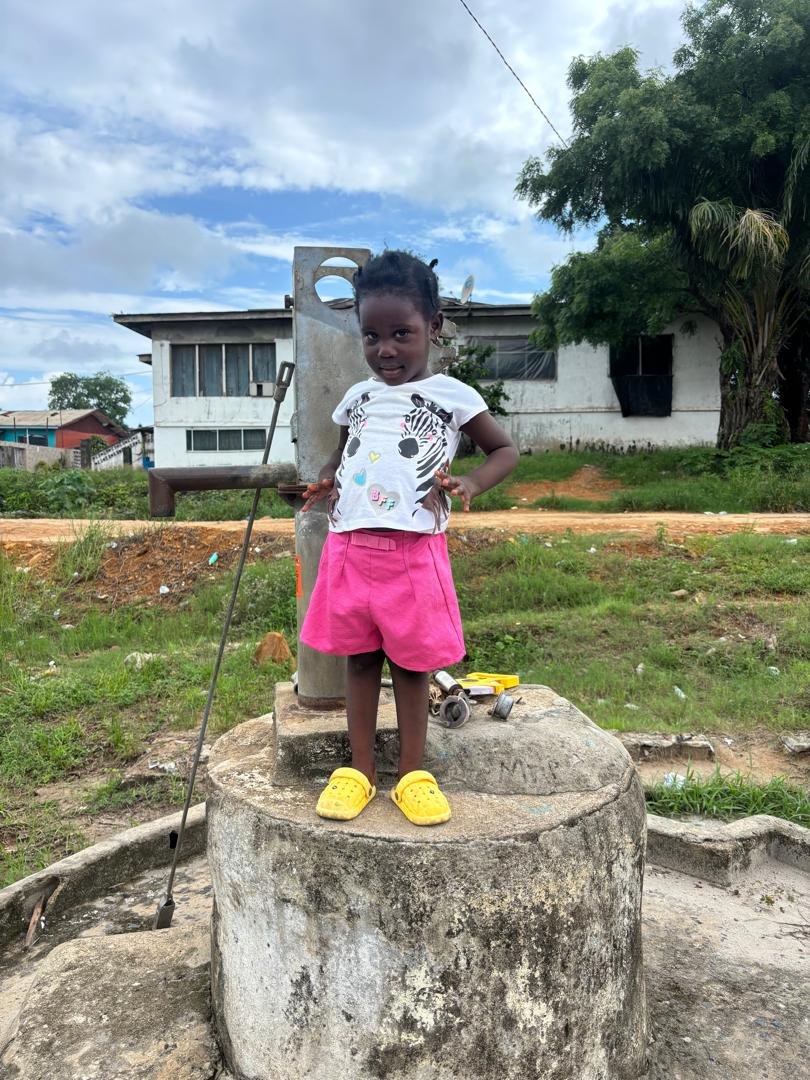
Liberia WASH Initiative · The story so far
How WaterStep set out to keep Liberia's hand pumps working: why we do this, what the field team found when they opened the pumps, and how the work is set to grow.
Why we do this
WaterStep has spent many years on one problem: water points that are built, then break, and are never fixed.
Keeping them working is what drives the team, one repair, one record and one community at a time. The work in Liberia puts that commitment into practice.
Building water points is not enough if nobody can fix them.
A worn seal fixed today is a pump that is not abandoned next year.
The people who drink the water are the best people to care for it.
The road so far
Water points that keep giving water long after they are built.
A feasibility study maps why Liberia's pumps fail. WaterStep films in rural communities.
An advance team counts public water points across Bong and Grand Bassa.
A Liberian team, in training, opens pumps with the WaterStep app and records every one.
From two counties to every water point in Liberia.
The problem
Source: Foster, Furey, Banks & Willetts, International Journal of Water Resources Development, 2019, doi:10.1080/07900627.2018.1543117.
of Liberia's improved water points were broken down.
2017 national water point mapping, Ministry of Public Works (WASH Liberia)of improved water points were fully working and in use. Another 17% worked with problems or were not used for drinking.
2017 national water point mapping, Ministry of Public Works (WASH Liberia)of deaths from diarrhoea in Liberia are attributable to unsafe drinking water, sanitation and hygiene.
WHO 2023, 2019 estimates (Annex 6, Table A6.1, pp. 53–54)What we found in Liberia
In 64 communities across Bong and Grand Bassa, 282 of 383 public water points, about 74%, were reported broken by the communities themselves.
Far above the national 18% because it counts what communities reported in the areas LWI targets, not a national sample. Our own test on the first visit points the same way.
Census: WaterStep advance team, 2026 (Bong County, 41 communities; Grand Bassa, 23 communities). Status of public water points as reported by communities.
Each square is one water point. Live from the WaterStep app, updated 7 November 2026.
Inside the pump
When the team opened the pumps, the same few parts kept coming up: seals, valves and guides that are cheap, light and can be carried to the village.
Share of water points opened up where the part was missing or worn and flagged for replacement. Live from the WaterStep app, updated 7 November 2026.
What we built
The WaterStep app walks a trained person through inspecting and repairing a hand pump, step by step, and works offline. Every visit leaves a verified record behind, so anyone can check what was found and what was fixed.
Guided steps take the inspector from arrival to repair.
The app ranks the likely problems and shows how to fix each one.
The pump goes back together with photos at every stage, then is tested again.
Before and after are saved together. Every later visit adds to the same record.
3D models and app screens show earlier test data.
How communities learn
3D models in the app let community members explore a hand pump part by part, so they can spot a fault and make simple repairs themselves instead of waiting weeks for outside help.
3D models and app screens show earlier test data.
Community members study every part before they open a real pump.
Worn seals and valves, the most common faults, can be replaced by a trained caretaker in hours.
Empowerment is the sustainability plan: the knowledge stays after the project team leaves.
Every repair a community can make itself is a water point that does not go back to square one.
Get involved →Why we test, not just ask
A test on the spot turns what people remember into a fact anyone can check.
Out of 121 water points where the community's report could be compared with the inspector's test. Live from the WaterStep app, updated 7 November 2026.
Real-world validation
Live from the WaterStep app · 7 November 2026
9 Apr 202627 Oct 202627 Oct 2026
Each square is a water point the field team opened, placed where its GPS was recorded. Full route, 9 Apr 2026 to 27 Oct 2026, through the communities of Bong in April and Grand Bassa in October. The line joins the centre of each day's work, as several teams worked in parallel.
151 of 152 water points shown. One has no GPS fix. Positions as captured on the phone; a few have low accuracy.
Early figures from a Liberian field team still learning the app: submitted inspections only (drafts, test and staff accounts and the training site excluded). They show what the app can capture, not final results.
What comes next
The 383 water points counted so far in Bong and Grand Bassa are the first step toward the roughly 890 hand pumps the Liberia WASH Initiative plans to repair. The same approach, one verified record for every water point, is now set to grow into a national system that monitors water points, flags breakdowns and coordinates repairs across Liberia.
Source: Liberia WASH Initiative impact plan, 2026.
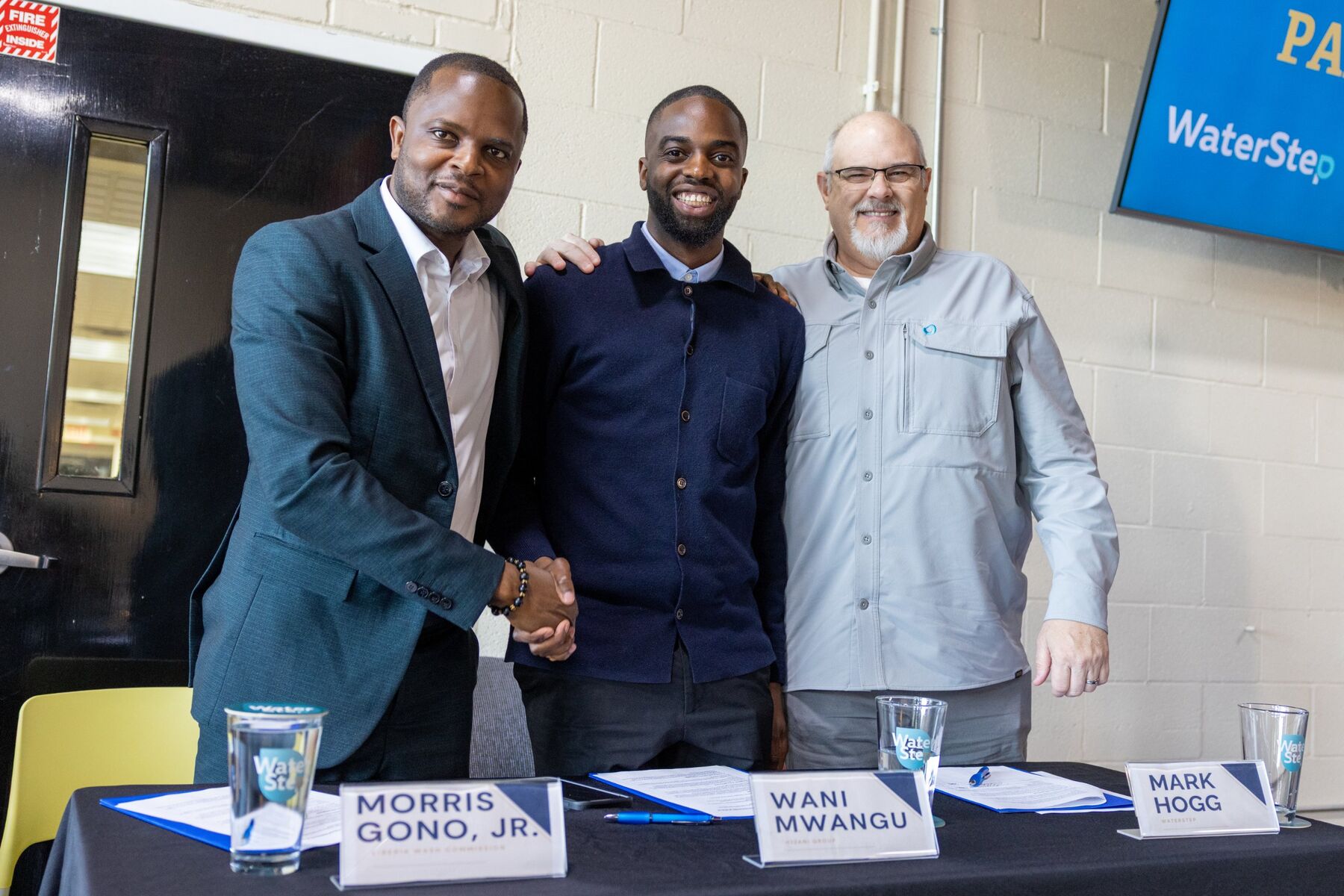
In October 2026, WaterStep, Kijani Group and Liberia's National WASH Commission signed a memorandum of understanding to develop it.
How it lasts
Without safe water, families boil what they drink, burning wood and charcoal. A working, tested water point removes that need, and the emissions it avoids can earn carbon credits. That revenue is meant to pay for upkeep, year after year.
Fix the water point and test the water before anyone calls it safe.
Working todayOne record per water point in the WaterStep app, updated on every visit.
Working todayAn auditor checks every year that the water points work. If one stops, its credits stop.
Next stepCredit revenue pays technicians, spare parts and water testing.
Next stepThe project is not yet certified. Carbon revenue depends on Gold Standard certification, authorisation, yearly verification and buyers.
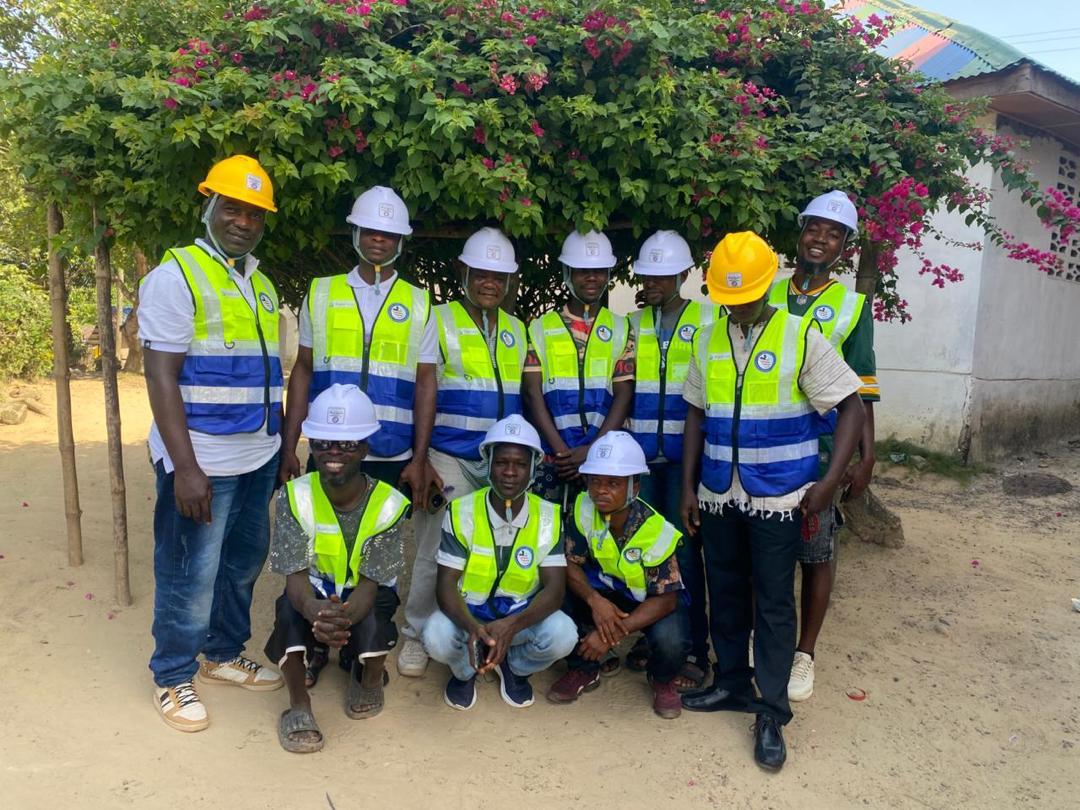
The Liberia field team
Follow the work at waterstep.org.
